The Forgotten History of Gothic Weddings
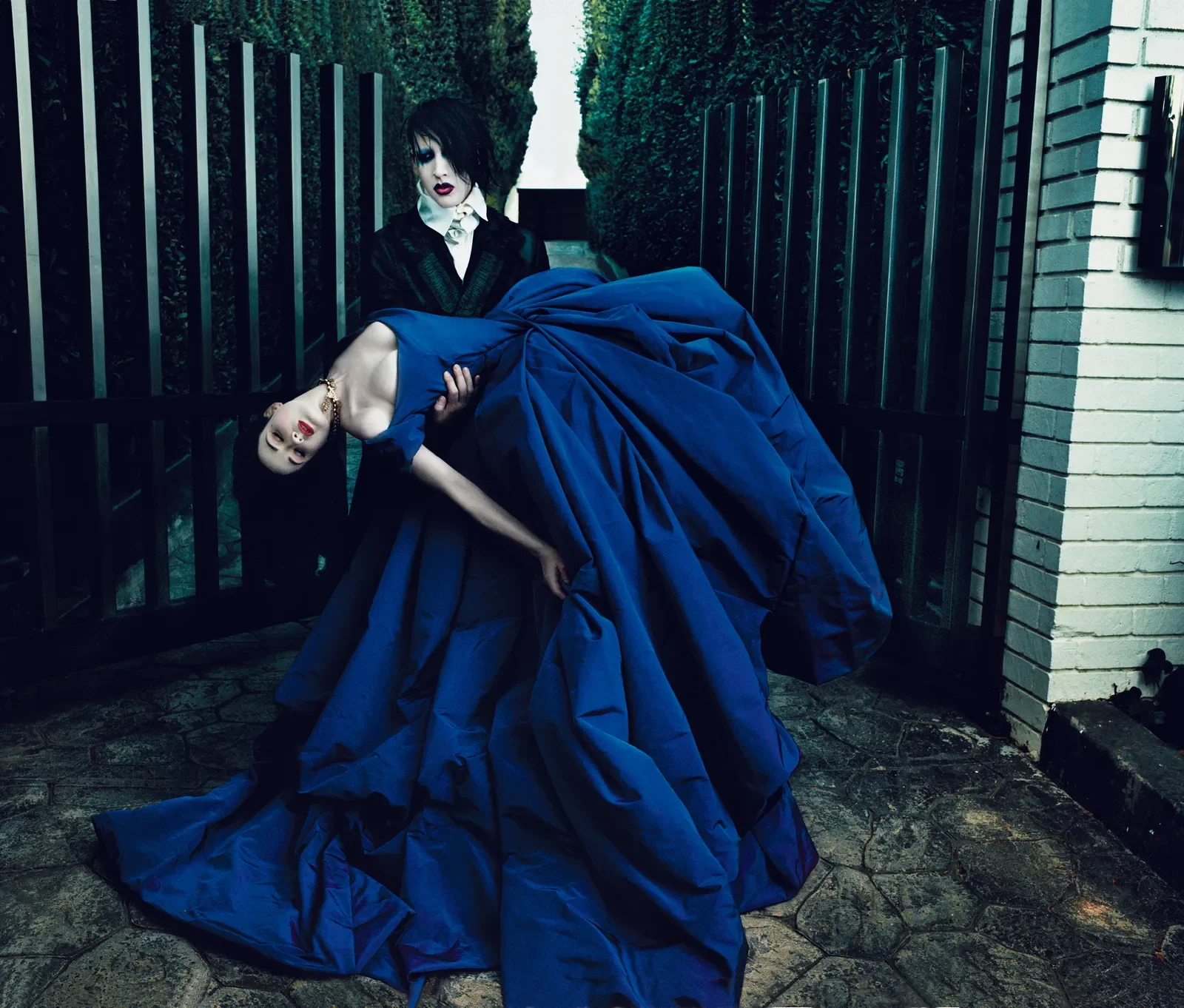
Marilyn Manson (wears John Galliano) and Dita Von Teese (wears Vivienne Westwood) Photographed by Steven Klein, Vogue, March 2006
Today, a gothic wedding hardly raises an eyebrow.
Black wedding dresses grace magazine covers. Alternative wedding fairs attract hundreds of visitors. Gothic florists, celebrants, photographers, cake artists and stationers can be found with a quick search online. Entire communities like Dark Wedding Collective have formed around helping alternative couples create weddings that reflect who they are.
For couples planning their wedding now, it can feel as though this world has always existed… but it hasn't.
In fact, the history of gothic weddings is not the story most people think it is.
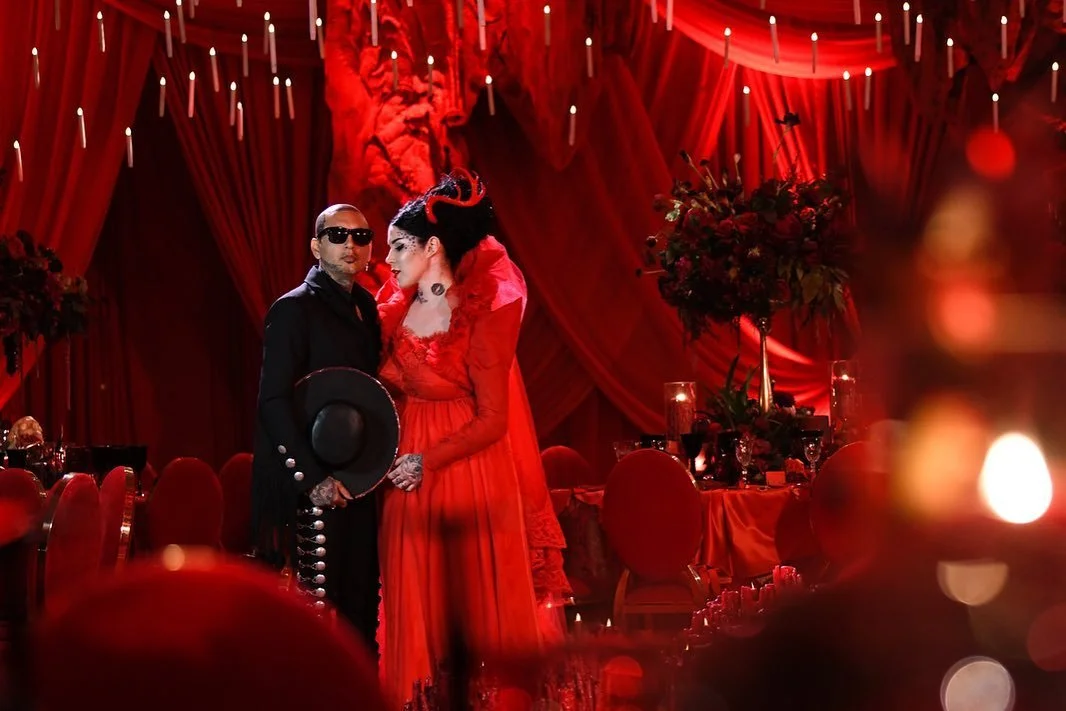
The wedding of Kat Von D and Rafael Reyes
Where Were All The Goth Weddings?
When people talk about the history of gothic weddings, they often look for famous examples.
The wedding of Marilyn Manson and Dita Von Teese is frequently cited. Kat Von D's dramatic red wedding is another. Robert Smith and Mary Poole, and Dave Vanian and Patricia Morrison are often referenced as some of goth's longest-standing couples.
Yet when you begin digging deeper, something surprising happens. There aren't actually that many famous goth weddings to find.
For a subculture that has existed since the late 1970s, there are remarkably few iconic gothic weddings documented in magazines, books or popular culture. At first glance, this seems strange. Surely goths got married? Of course they did. So where are all the weddings?
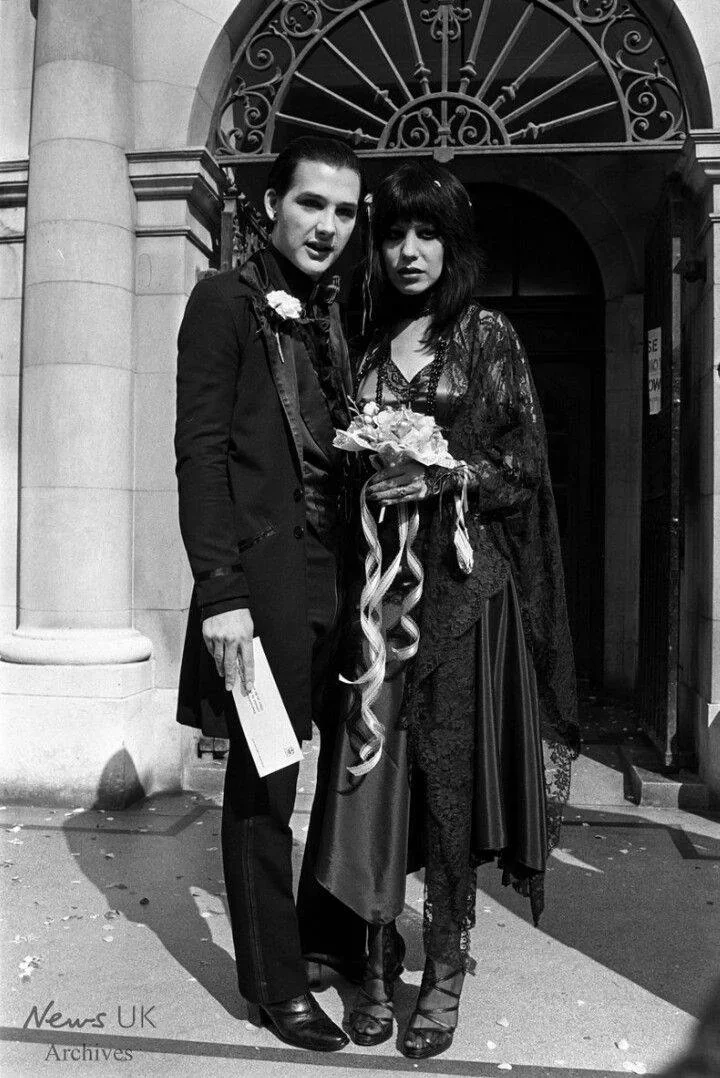
Dave Vanian and Patricia Morrison
Goth Was Never About Fitting In
Part of the answer lies in the roots of the goth subculture itself.
Emerging from punk, goth inherited a healthy scepticism towards convention. Traditional expectations around appearance, careers, religion, relationships and social norms were often questioned rather than accepted without thought. For some people, that included marriage itself.
Many alternative couples chose long-term partnerships without formal marriage. Others married quietly and privately, with little interest in presenting themselves as wedding inspiration, unlike mainstream celebrity culture, where weddings often became public spectacles. Many figures within the goth scene simply didn't make their wedding day part of their public identity. The result is a curious gap in the historical record. Not because goths weren't getting married, but because weddings weren't necessarily viewed as something to be showcased.
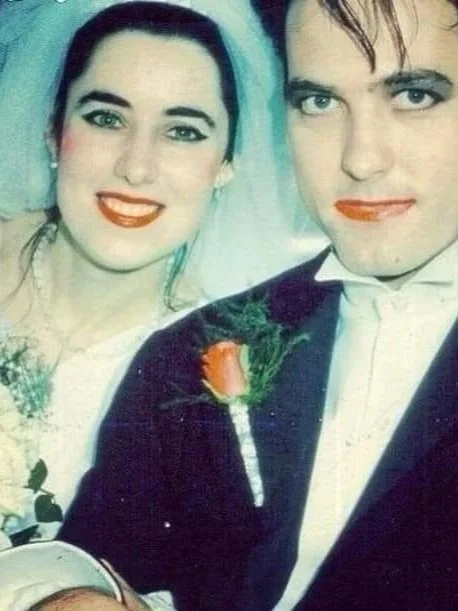
Robert Smith and Mary Poole
The Bigger Problem: There Was Nothing To Book or Buy
But there is another reason, and it may be the most important one… there was no gothic wedding industry.
If you were a goth bride in the 1980s, 1990s or even early 2000s, where exactly were you supposed to shop? There were no gothic bridal boutiques. No black wedding dress collections. No alternative wedding fairs. No directories filled with dark-hearted suppliers. No Pinterest boards. No Instagram inspiration. No blogs dedicated to alternative weddings.
The wedding industry presented a very clear picture of what a bride should look like; white dress, traditional styling, traditional venues, traditional expectations. If that wasn't you, your options were limited. That meant many couples adapted what they could find. Some dyed dresses. Others commissioned corsets, wore eveningwear, made things themselves or abandoned traditional wedding aesthetics altogether. Not because they wanted to… because they had to.
"There's No Market For Goth Weddings"
It's a phrase many of us have heard over the years.
"There isn't a market for that."
"Nobody wants black wedding dresses."
"Alternative weddings are too niche."
But looking back, I can't help wondering if people were asking the wrong question. Perhaps there wasn't a visible market because there wasn't anything available for people to buy and no-one brave enough to market a niche. After all, you can't spend money on products and services that don't exist.
The truth is, the demand was always there, but the infrastructure wasn't.
Thousands of alternative couples were trying to create weddings that reflected who they were, but they were doing it without dedicated suppliers, without community support and often without ever seeing another wedding like their own and a massive fear that their wedding would look tacky or like a costume party.
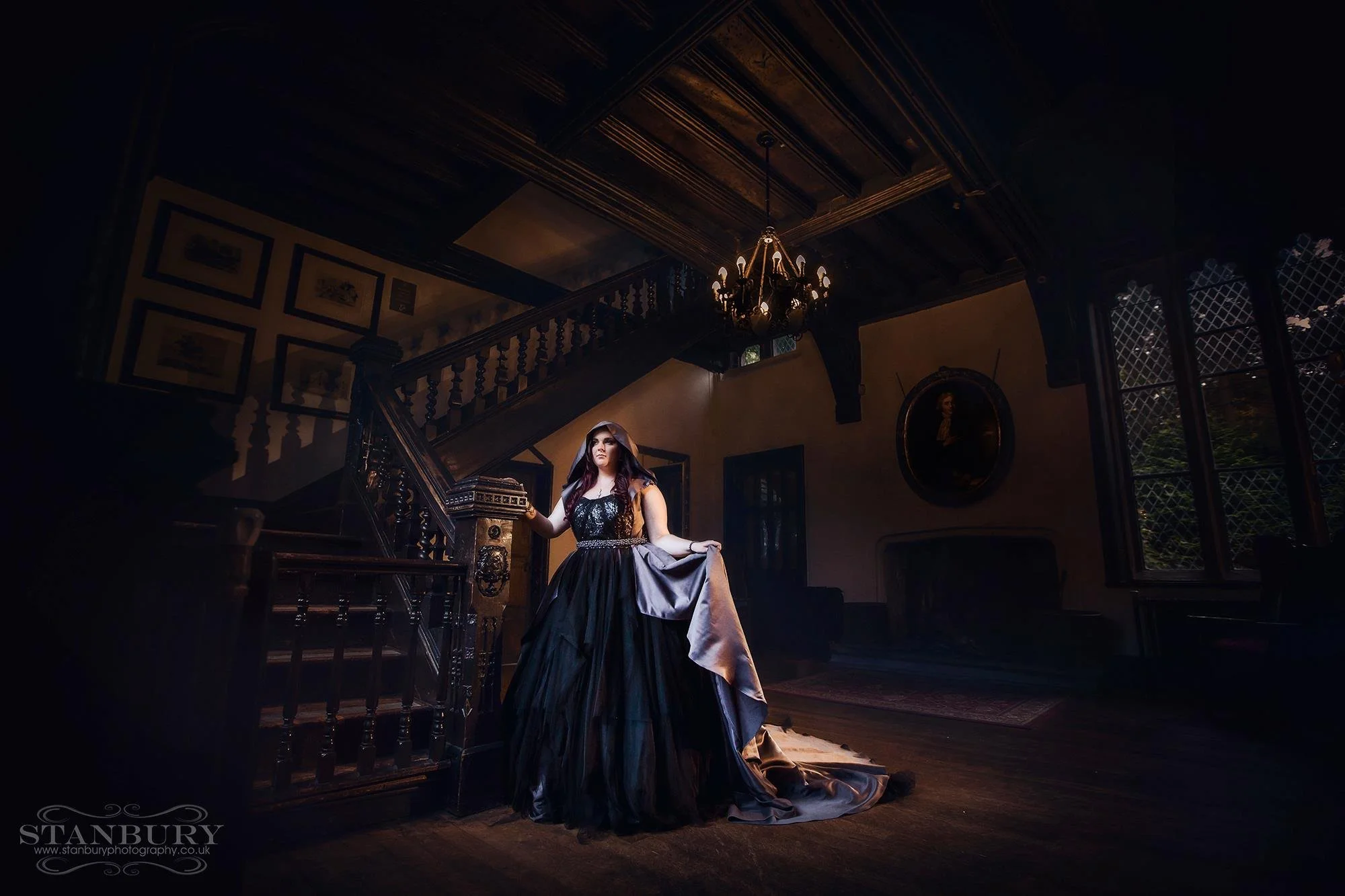
Lauren, an early Legend Bride got married in 2012 at Samlesbury Hall
Building A New Alternative Wedding Industry
When I got married in 2005 I remember feeling caught between two worlds. Traditional weddings didn't feel like us, but there were very few alternatives available. We wanted something meaningful, something that reflected who we already were, yet finding inspiration and suppliers felt almost impossible.
Something began to change during the late 2000s and 2010s. Alternative photographers started carving out space for themselves. Celebrants began offering ceremonies that stepped beyond tradition.
… and Legend started creating wedding dresses for people who didn't see themselves in mainstream bridal fashion.
Slowly, the industry began to catch up with the couples it had previously ignored. Alternative wedding fairs appeared and communities formed online. Not because trends changed, but because people refused to compromise. Couples kept asking for black dresses. They kept searching for suppliers who understood them. They kept creating weddings that reflected their identities, even when the industry offered them very little support.
And eventually, businesses began answering that call.
We Remember What It Was Like
When we started designing alternative wedding dresses more than a decade ago, black wedding dresses were still viewed by many as a novelty. People regularly told us there was no market for them. We’d turn up at wedding fairs and watch as mothers looked on horrified.
Yet year after year, couples walked through our doors looking for exactly what we created. Not because they wanted to shock anyone or because they were following a trend. But because they wanted to feel like themselves on one of the most important days of their lives.
We recognised something that many parts of the wedding industry had missed. Alternative couples weren't asking for less. They weren't rejecting weddings. They were asking to be included in them.
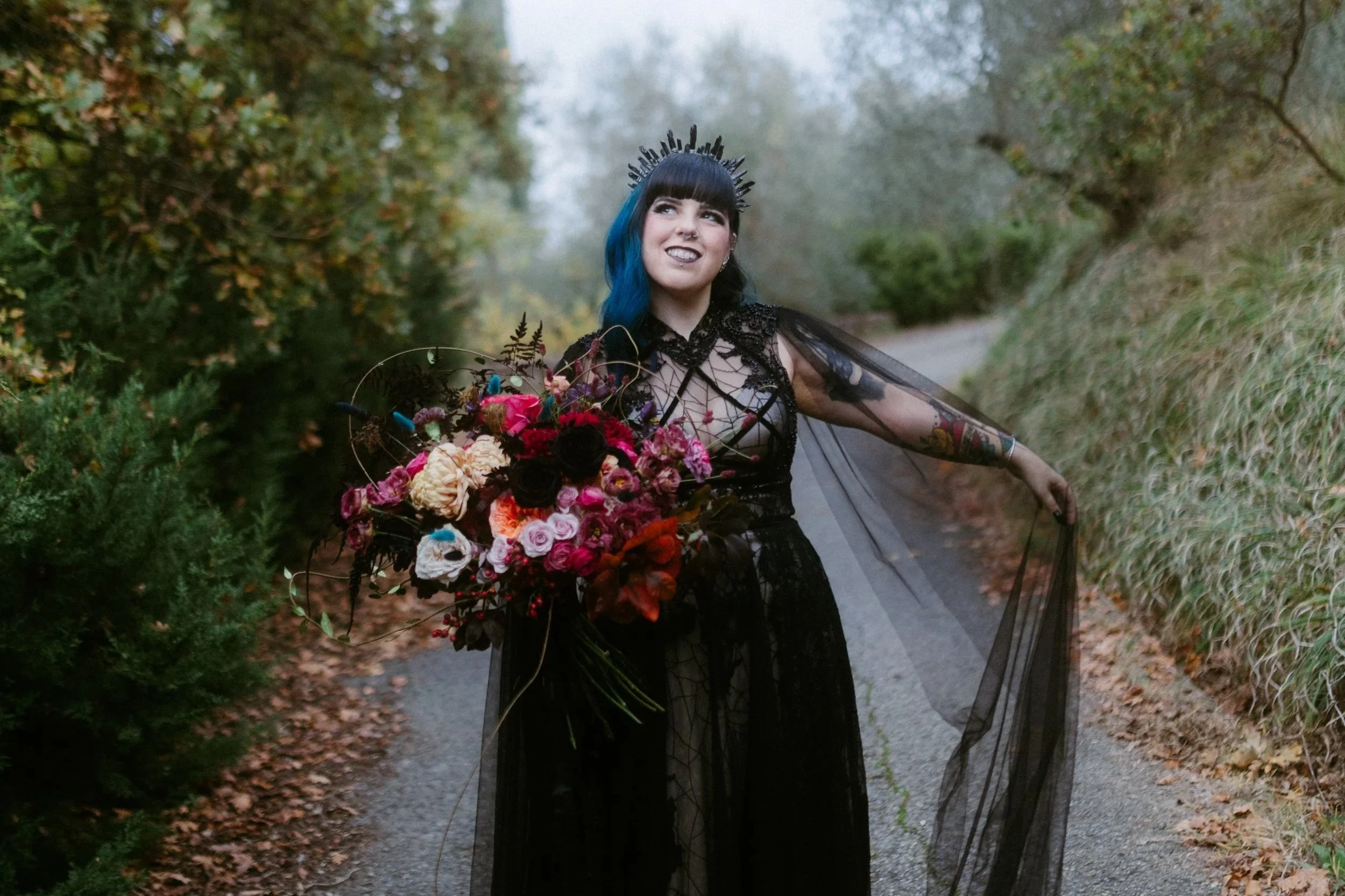
A more recent wedding of Sara & Alessandro from Tuscany
The Real History Of Gothic Weddings
Perhaps the history of gothic weddings isn't really the story of celebrities at all. Perhaps it's the story of ordinary people.
The couple who spent months searching for a black dress before black dresses were readily available.
The bride who taught herself to sew because she couldn't find what she wanted.
The pair who transformed a village hall with candles and fabric drapes.
The goths, punks, metalheads, pagans, romantics and dreamers who quietly created weddings that reflected their lives long before the industry was ready for them.
They are the reason gothic weddings exist today… They built the demand. They created the visibility. They proved there was a place for alternative love stories. And every black wedding dress, every dark ceremony, every alternative wedding fair and every supplier serving this community today stands on the shoulders of those couples who refused to disappear.
The gothic wedding industry didn't appear overnight.
It was built, piece by piece, by people determined to celebrate love without leaving themselves behind.
