The Meaning behind the stories we choose
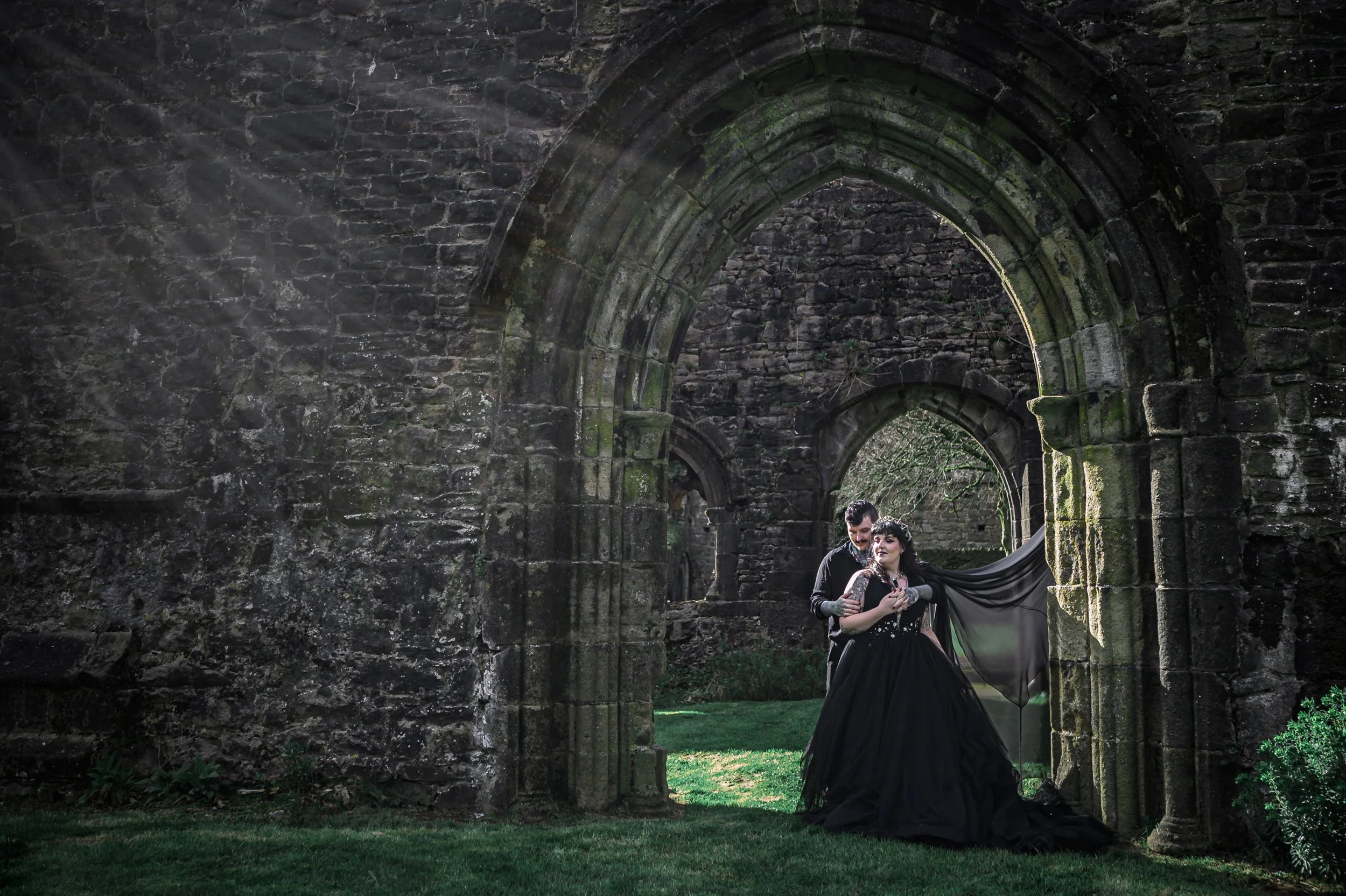
Image: Vicky Dubois Photography
Summary:
Do the names and symbols on your dresses have religious meaning?
A conversation earlier this week got me thinking about how people perceive Legend and our potential religious viewpoint.
Although many of our dresses are inspired by gods, goddesses, folklore and ancient symbols, they are not expressions of religious belief, nor are they intended to encourage one. We don't create dresses as acts of worship, nor do we expect our couples to share any particular faith or philosophy. The stories and symbols we choose are valued for what they say about the human experience, not because we believe they hold religious authority.
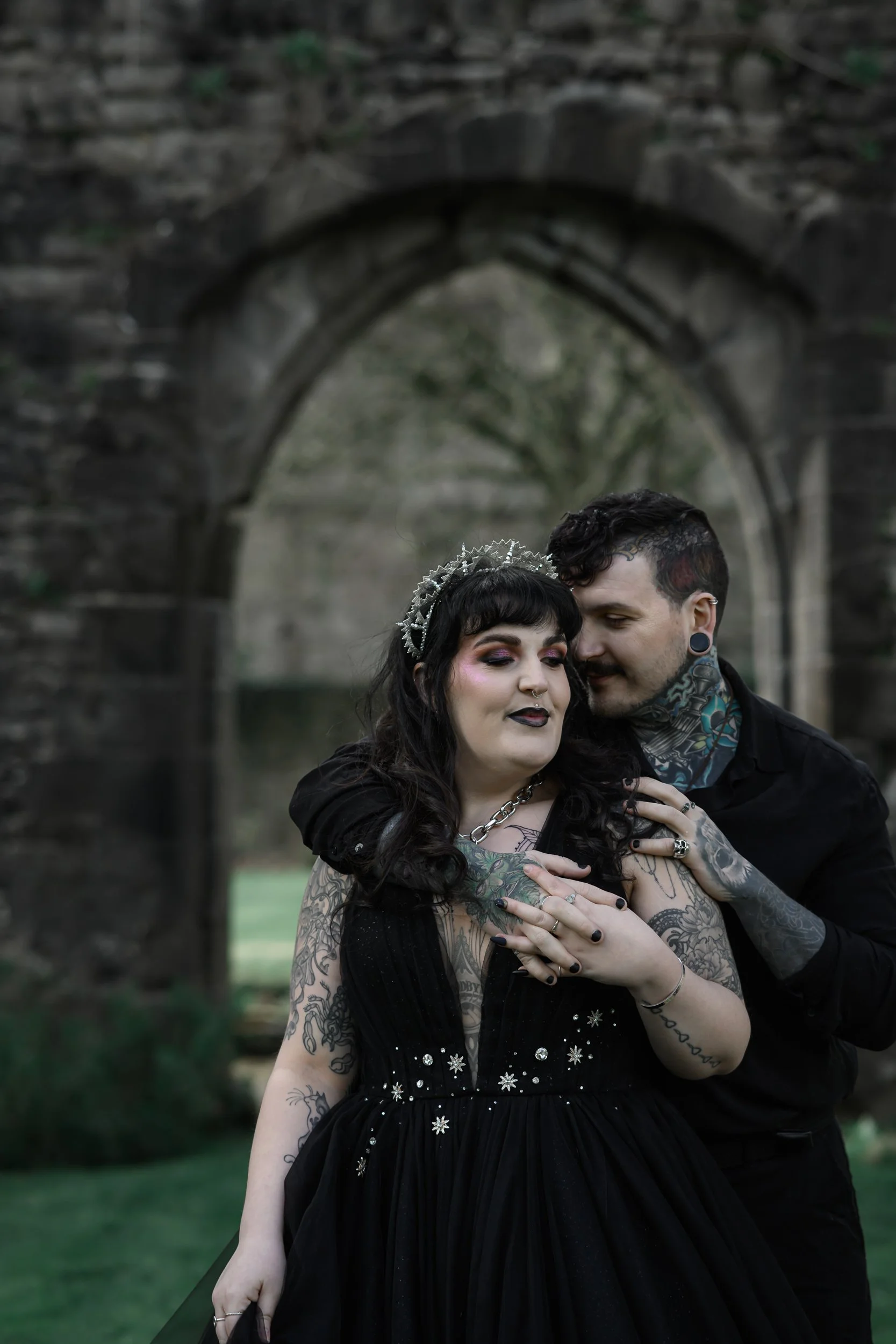
Image: Vicky Dubois Photography
The Meaning Behind the Stories We Choose
Every so often, someone visits the studio and asks a question that makes us pause. We are known for weaving symbols into our designs; the pentagram lacing of Zorya and the hexagram of Melinoe are the most obvious, but sometimes it's because a dress is named after an unfamiliar goddess or we choose a certain song on a reel or TikTok. It makes me realise we don’t talk about why we choose the stories we choose, which naturally makes people wonder whether we follow a particular religion, ask whether we're pagan and occasionally assume something altogether more sinister.
The question usually comes with gentle curiosity, sometimes, if we're honest, it begins with uncertainty. Those conversations have made us realise that perhaps we've never explained why we choose the stories we do.
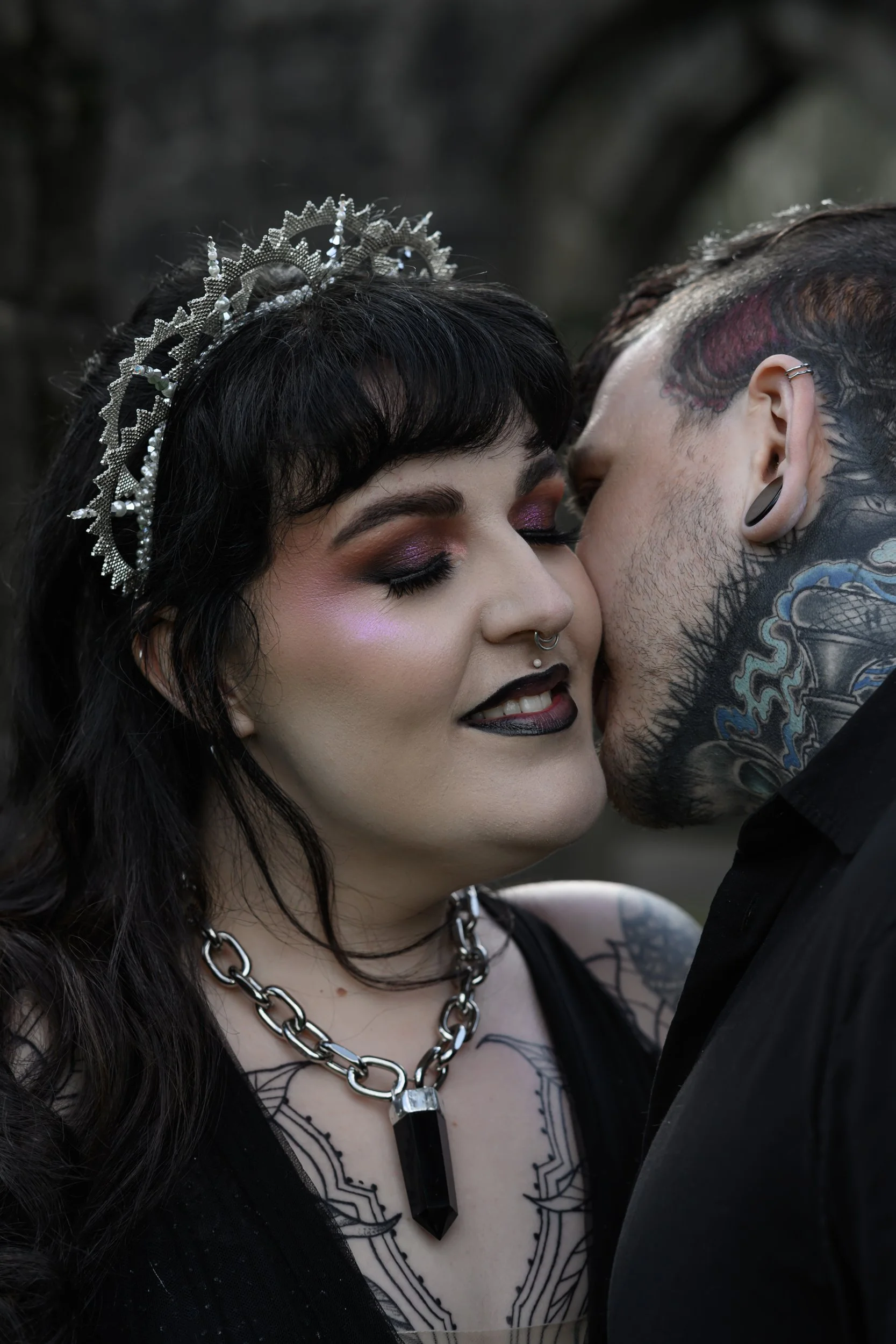
Image: Vicky Dubois Photography
Stories, not sermons
One of the questions we're asked most often is whether the names and symbols in our collections have religious meaning. The answer is beautifully simple… no.
Our dresses aren't expressions of religion… they're expressions of humanity.
Although many of our collections are inspired by mythology, folklore, ancient symbols and legendary figures, we don't choose them because we believe they should be worshipped. We choose them because they capture something timeless about being human.
Long before psychology gave us language for grief, courage or transformation, people told stories. They told stories about gods to capture the immensity of ideas. They told stories about monsters to make sense of difficulties. They told stories about forests, ravens, wolves and stars. They weren't simply entertainment. They were ways of understanding ourselves.
That is the tradition we feel connected to. Not organised religion. Not dogma. Simply the enduring human habit of telling stories to make sense of life.
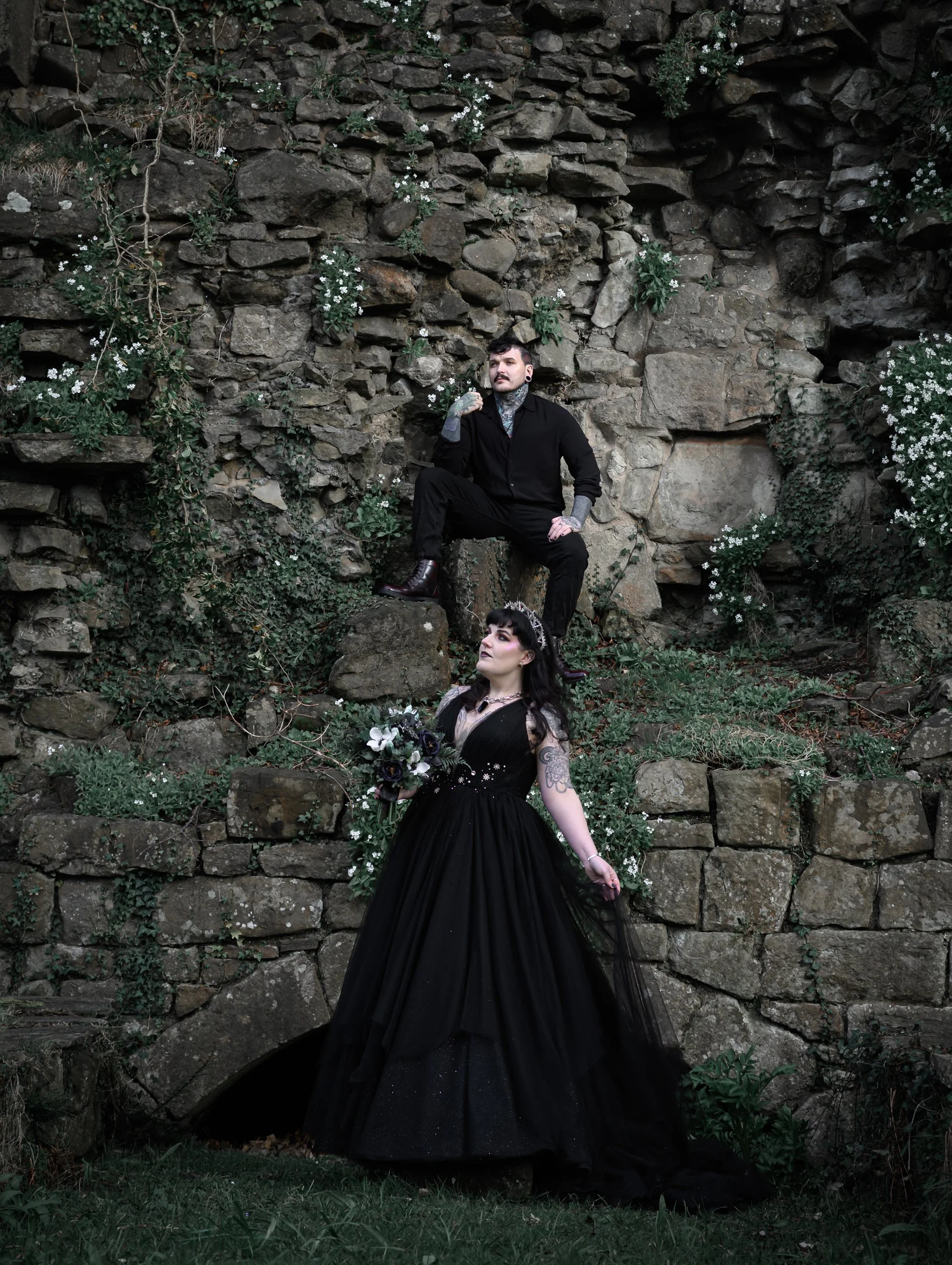
Image: Vicky Dubois Photography
Symbols belong to many people
One of the reasons symbols are often misunderstood is because people assume they have one fixed meaning. In reality, very few symbols belong to just one belief system. A pentagram has appeared in Christian churches, pagan traditions, ceremonial magic, modern witchcraft and countless works of art. The moon has represented femininity, time, mystery and guidance across cultures separated by oceans. Ravens have been messengers, protectors, tricksters, companions and symbols of wisdom depending on where in the world you happen to stand.
Symbols don't arrive carrying one universal meaning. Their meaning comes from the story being told.
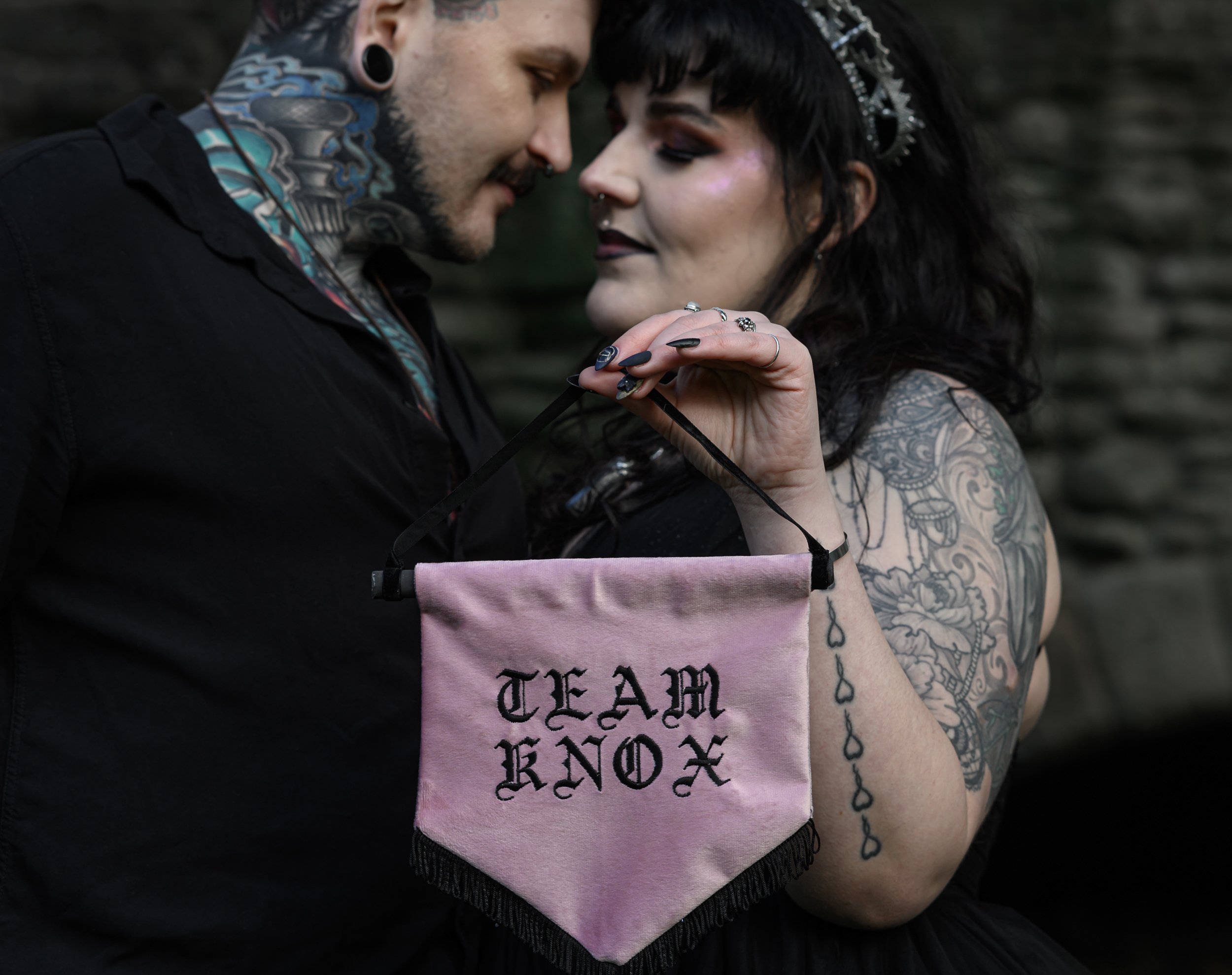
Image: Vicky Dubois Photography
The world that inspires us
If our work has a spiritual home, it probably isn't a religion at all - It's the natural world! Ancient forests, the changing seasons, the night sky, the quiet certainty that after every winter, something begins to grow again.
Nature asks nothing of us except that we notice it. It reminds us that change isn't failure. That endings make space for beginnings. That strength can be quiet. That beauty is often imperfect.
We find more inspiration in those rhythms than we do in rules.
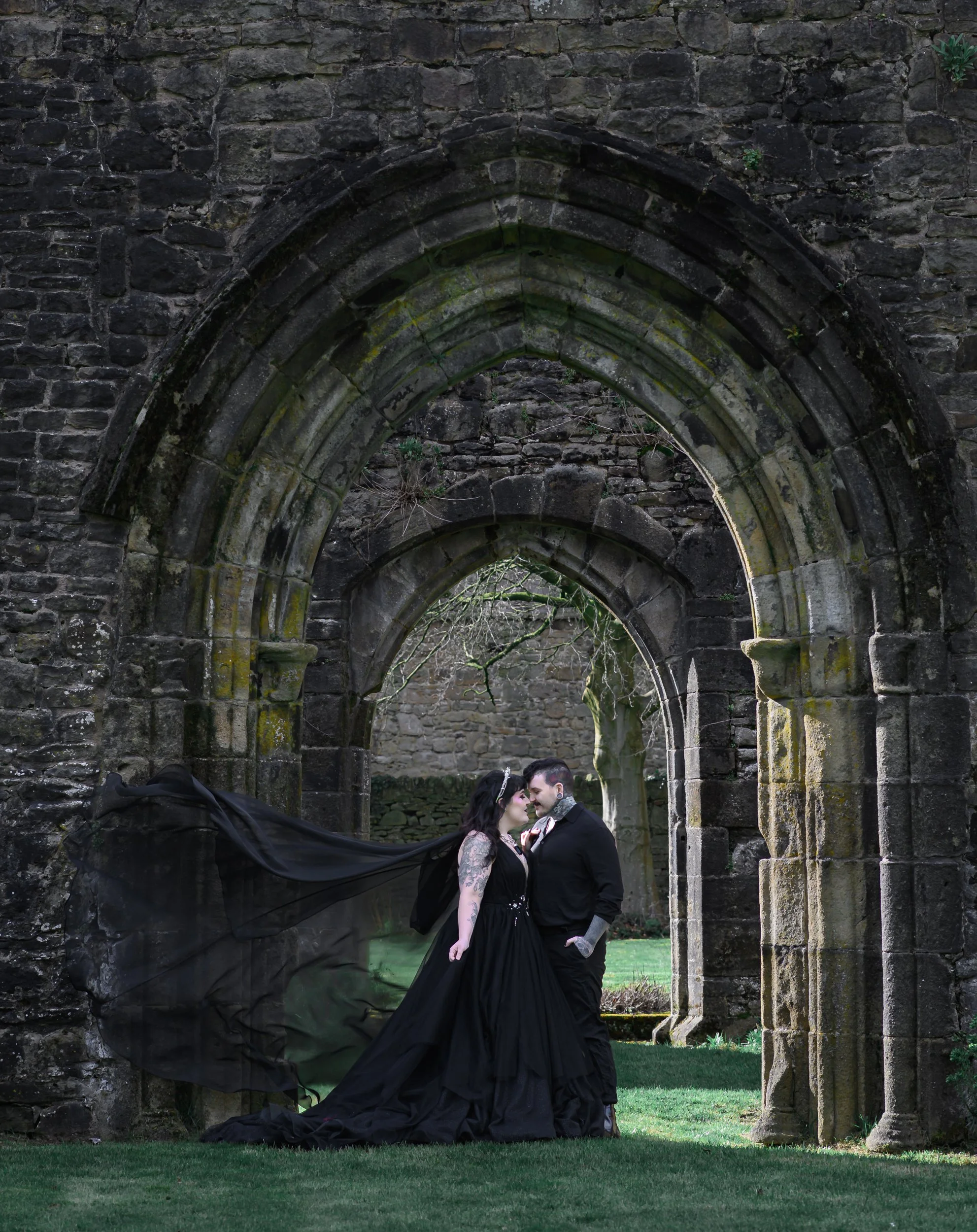
Image: Vicky Dubois Photography
Why mythology still matters
We don't believe Persephone has to be literally real for her story to matter. Her journey into darkness and eventual return has helped people think about grief, resilience and hope for thousands of years. The Morrigan reminds us of courage. Asteria reminds us to look for light. Hecate reminds us that crossroads are part of every life.
Whether you see those figures as deities, archetypes, literature or simply beautiful stories is entirely your own choice.
For us, they're reminders of qualities that already exist within us.
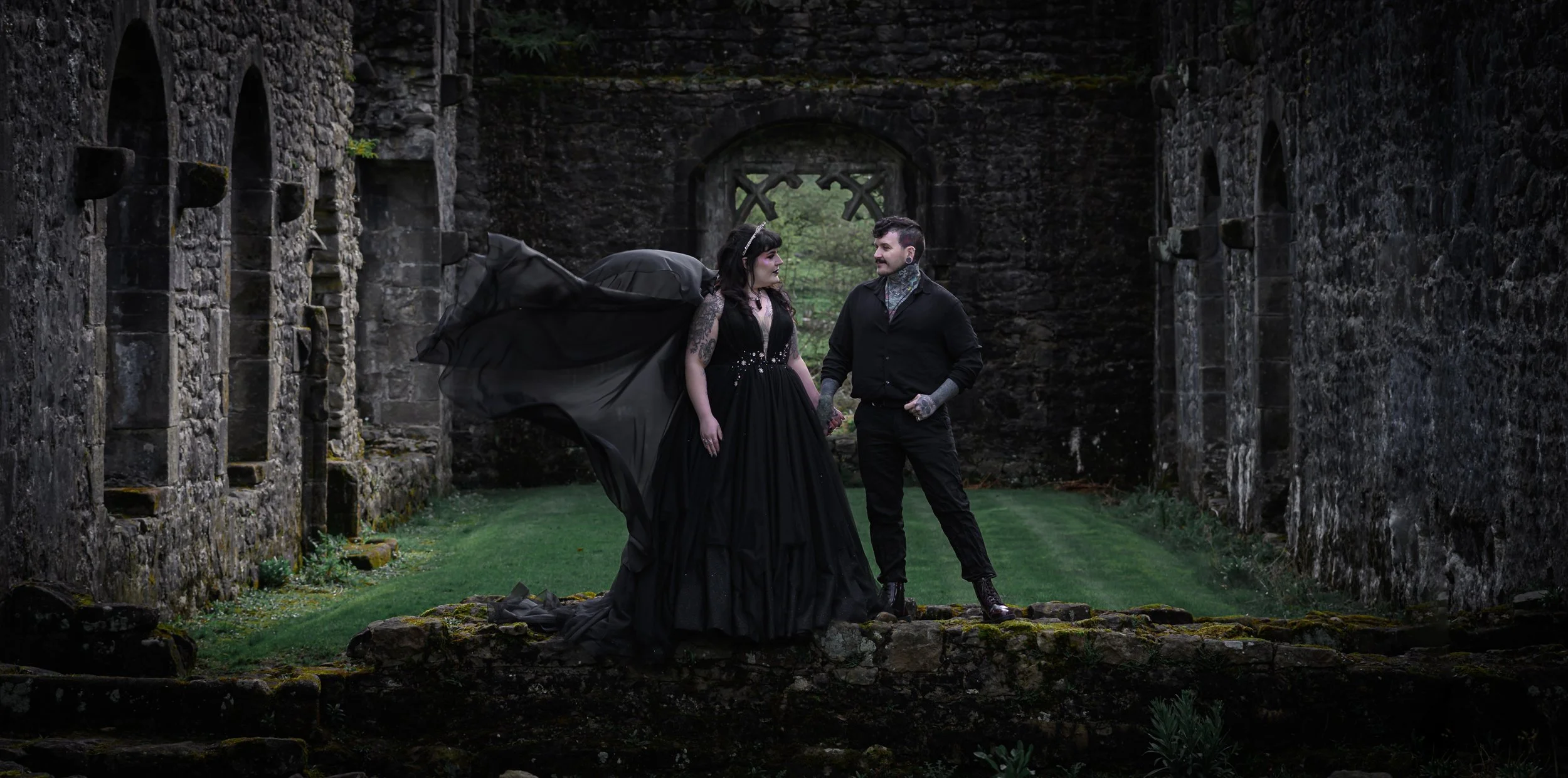
Image: Vicky Dubois Photography
Our couples believe many different things
One of the loveliest parts of this job is meeting people from every imaginable background.
Some of our couples are Christian, some are pagan, some are atheist. Some are spiritual in ways that don't fit neatly into any label, and many have never really thought about it at all.
They're all welcome here - we're not interested in telling people what they should believe.
We're interested in helping them feel seen.
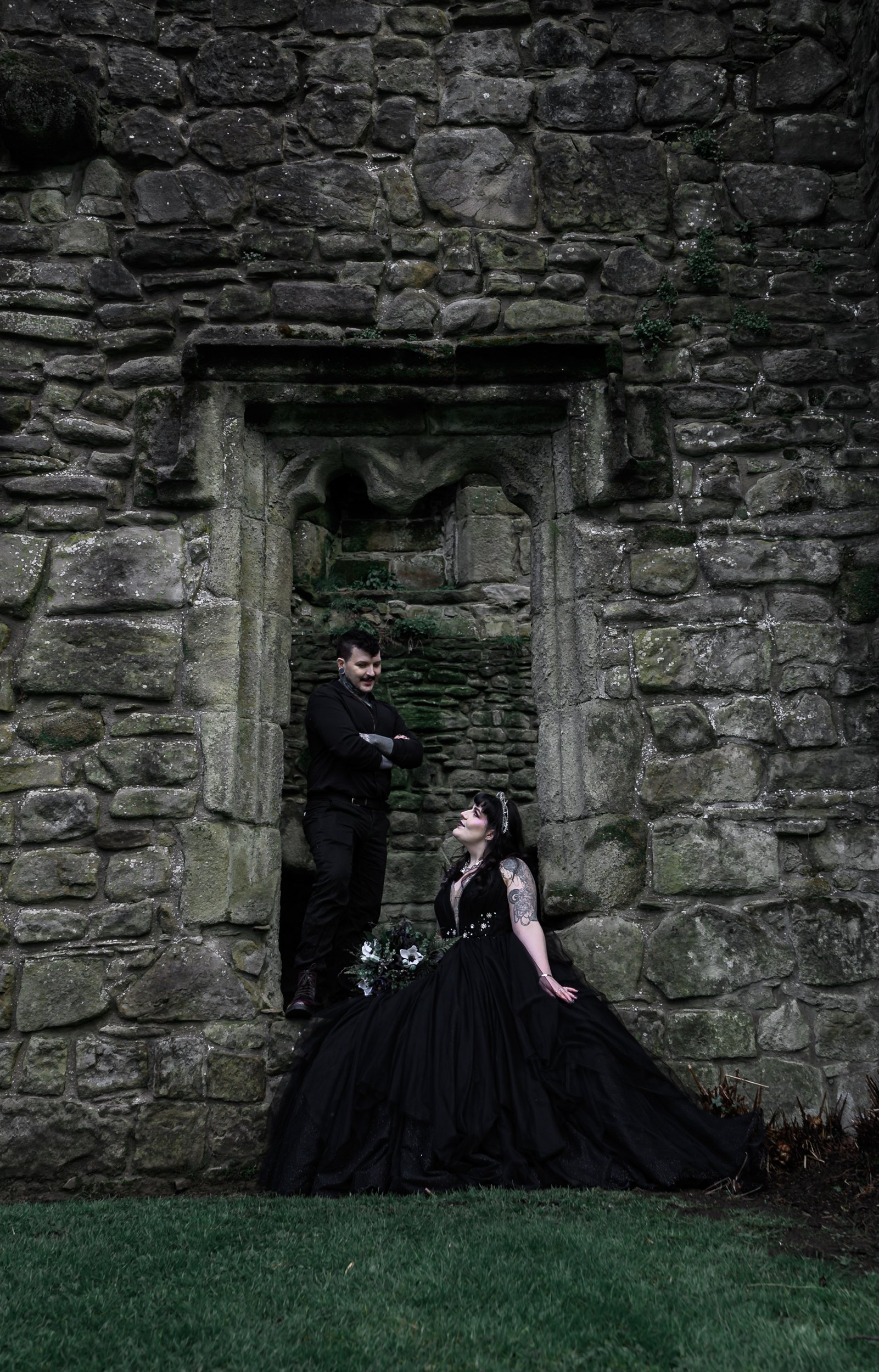
Image: Vicky Dubois Photography
The stories we choose
When we name a dress after Persephone or embroider a symbol inspired by ancient history, we're not asking anyone to adopt our beliefs.
We're inviting them into a story because stories have always helped us understand love and loss, transformation, hope, identity and courage. They remind us that other people, across thousands of years, have asked the same questions we ask today, and perhaps that's why they endure. Not because they're literally true, but because they reveal truths about being human, and in the end, that's what Legend has always been about.
Not religion.
Not rebellion.
Not even fashion.
It's about creating something that helps you recognise the person you've always been.
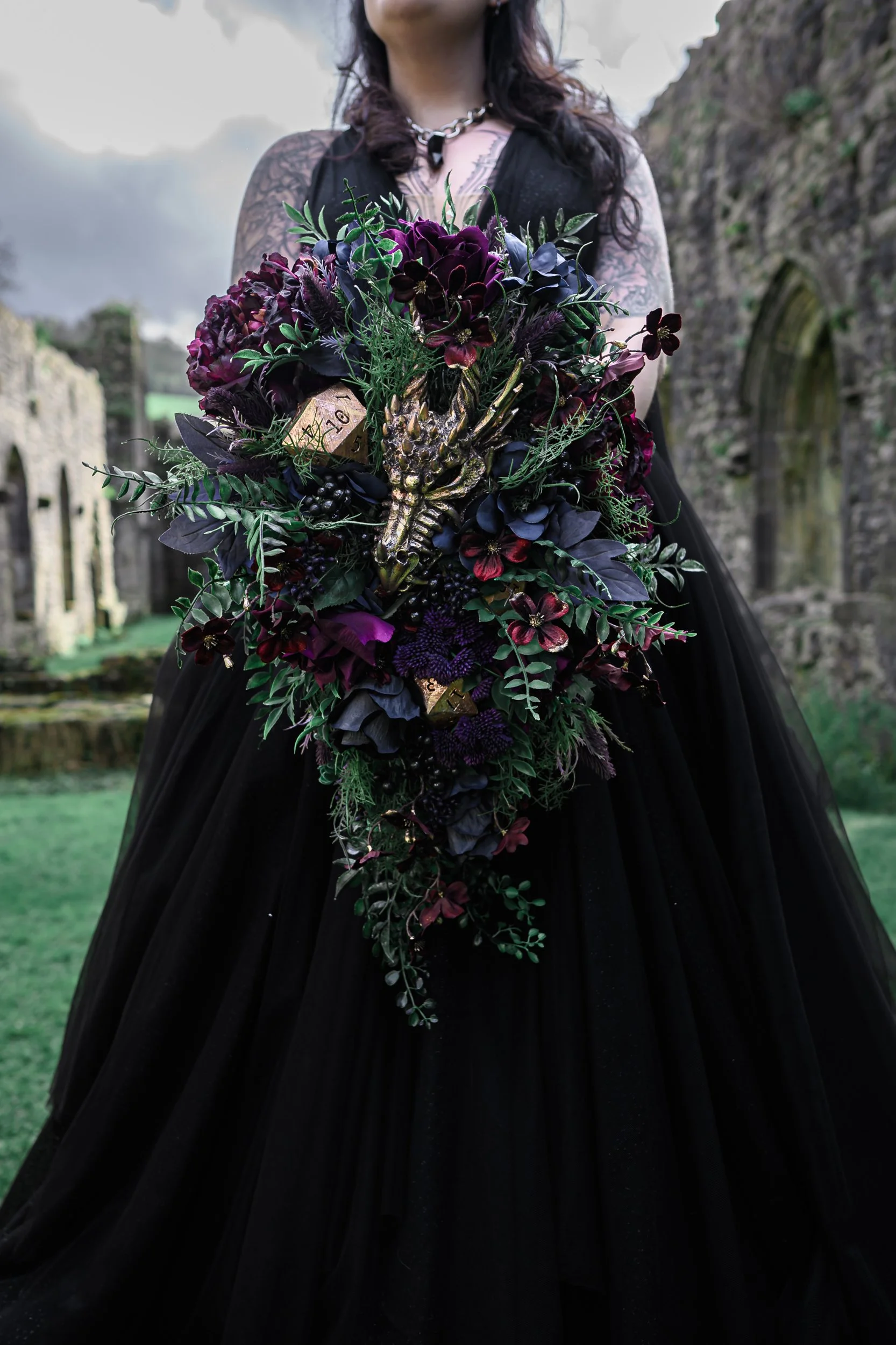
The Shoot
Inspired by A Court of Thorns and Roses:
Team:
Dress - Zorya by Legend Bridal
Images: Vicky Dubois Photography
Bouquets - Maddison Rocks Floral
Banner - Irregular Signs
Headpiece - Bunny Loves Evie
Necklace - Luna Amatores
Makeup - Hannah Carson MUA
Models - Natalie and Ash
