Why Bridal Sizes and High Street Sizes Are So Different (And Why We Totally Ignore Them)
One of the most common questions we hear during an appointment is:
"And what size is this sample?"
Our answer surprises most people.
"It doesn't have one." or “It’s a Moth”
Don't get me wrong, every Legend gown is still made using a carefully developed size chart. As dressmakers we need a consistent system for creating beautifully fitting garments. But we've deliberately moved away from traditional clothing sizes because we don't believe a number on a label tells you anything meaningful about your body.
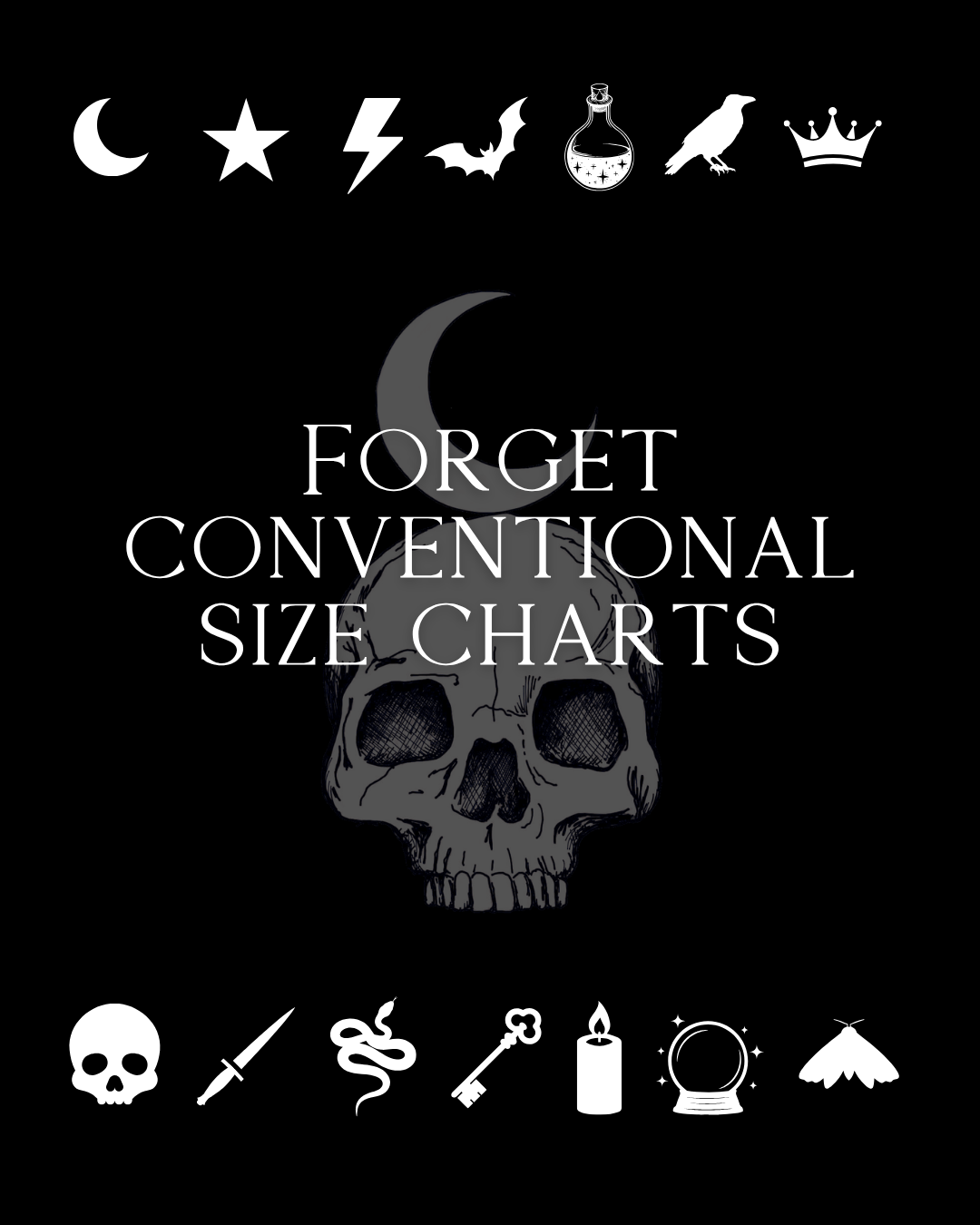
Instead, every size in the Legend collection is represented by a symbol. It might be a Skull. A Moon. A Lightning Bolt. The measurements haven't changed, but the way we talk about them has. We've never believed that a number should have the power to shape how someone feels about themselves before they've even stepped into a wedding dress.
So why do bridal sizes and high street sizes seem so wildly different? Why can one person wear three different sizes depending on where they shop? And why do we at legend, pay far more attention to measurements than we ever do to the number on a label?
Let's dive in.
The Short Answer:
The number on a clothing label isn’t a measurement. It’s not a universal standard. It’s not an objective description of your body. It’s simply a tool used by manufacturers to produce clothing in standardised sizes. And those standards vary wildly. A size 14 in one shop might fit exactly the same as a size 16 in another. A size 12 pair of jeans may have completely different measurements to a size 12 dress.
Add bridalwear into the mix and suddenly the numbers seem to make even less sense. The truth is that the label tells us very little. Your measurements tell us everything.
A Brief History of Clothing Sizes
For most of history, clothing wasn’t bought from rails. It was made for individuals. Whether it was created by a local dressmaker, tailor, seamstress or family member, garments were made to fit the person wearing them. Standard clothing sizes only became necessary when clothing started being mass produced. Manufacturers needed a way to make large numbers of garments that would fit large numbers of people. The problem, of course, is that people don’t come in standard sizes. Bodies vary enormously. Chest, waist and hip measurements don’t increase in perfect proportion. Height varies. Shape varies. Proportions vary. Yet somehow all of that complexity has to be squeezed into a handful of size numbers. It was never going to be perfect.
The Rise of Vanity Sizing
Over time something else happened. Many high street brands began gradually increasing the measurements associated with a particular size. The reasons are complicated, but one thing became clear: people generally preferred buying a smaller number. As a result, a modern size 14 may have measurements that would have been labelled quite differently decades ago. This is known as vanity sizing. It’s why you can walk into three different shops and leave with three different sizes that all fit perfectly well. The numbers themselves have become increasingly disconnected from actual body measurements.
Why Bridal Sizing Feels Different
Bridalwear largely escaped this trend. Most bridal manufacturers still work from measurement charts that are often closer to the original sizing systems used decades ago. This means it’s completely normal for someone who buys a size 14 on the high street to find themselves ordering a bridal size 18 or even 20 depending on brand. That doesn’t mean you’ve gained weight. It doesn’t mean anything is wrong. It doesn’t mean bridal designers are judging you. It simply means the chart is different.
Your body hasn’t changed in the thirty seconds since we picked up a tape measure. The only thing that changed was the label.
Why We got rid of the Number altogether
For years we simply left the size labels out of our sample dresses.
Then we realised something, even when we weren't saying the number out loud, we were still asking online couples to order one… It didn't sit comfortably with us. If dress sizes are simply a manufacturing tool, why were we still presenting them as part of the customer experience?
So we changed it.
Today, every size in the Legend collection is represented by a symbol instead of a number. Behind the scenes, our workshop still uses a carefully developed size chart because that's how garments are made. But for our brides, we talk about measurements and symbols instead.
Your measurements help us choose the correct starting point. The symbol simply replaces an arbitrary number. Nothing about your body changes. Nothing about your worth changes. The only thing we've removed is a label that too often carried unnecessary emotional weight.
The truth
We can't change how the fashion industry talks about bodies.
But we can change how we do.
At Legend, you'll never be "a size 18."
You might be a Moon.
You might be a Dagger.
You might be a Skull.
More importantly, you'll be you.
