What is a gothic wedding?
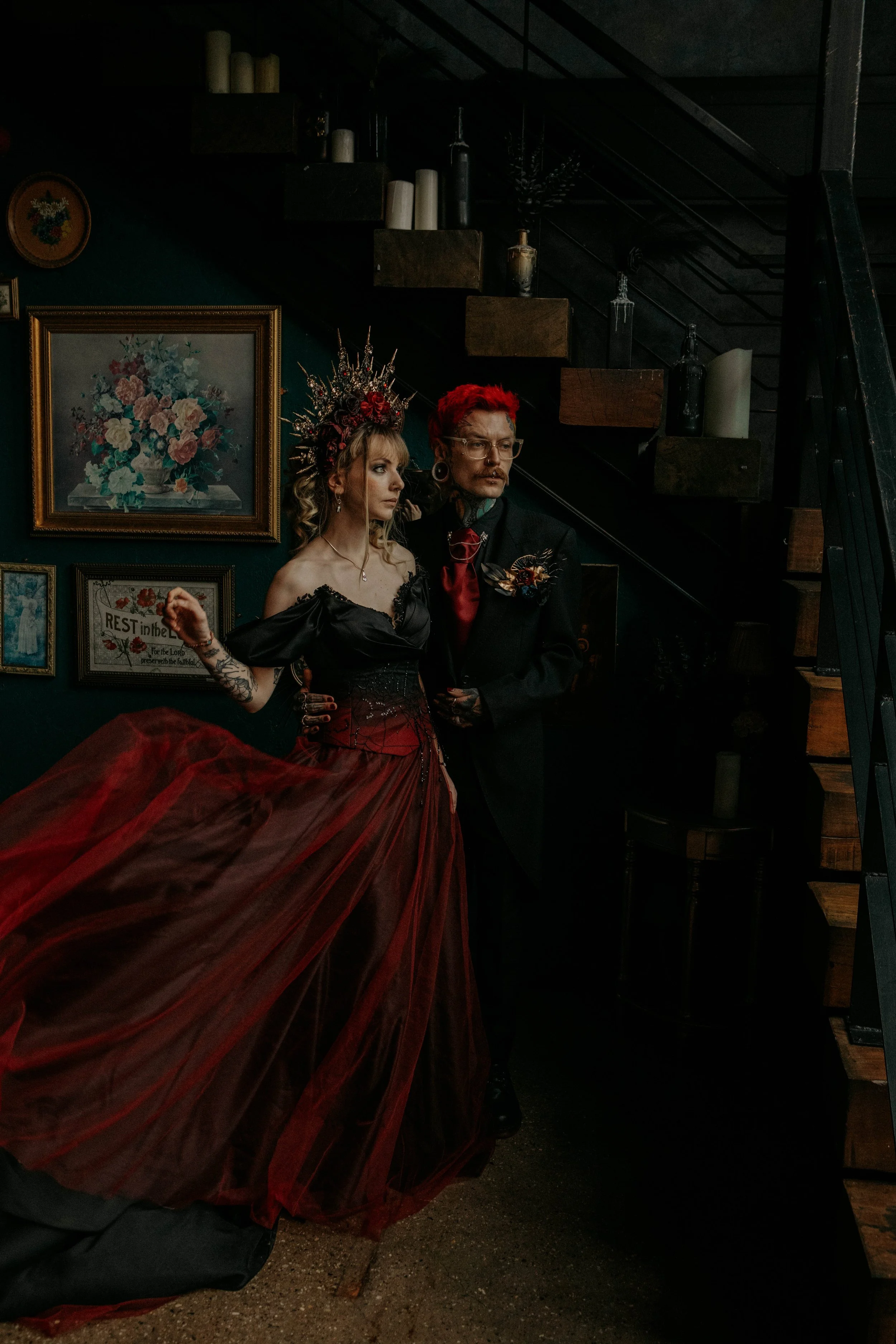
Baroque Beauty & The Beast, Concept Sira Rose MUA, Image Laura Fitzgerald Photography, Dress - Legend Bridal bespoke creation
When people hear the words "gothic wedding", they often picture black wedding dresses, candlelit tables, ravens and velvet suits. And whilst those things can certainly be part of a gothic wedding, they aren't what makes a wedding gothic. After all, simply wearing a black dress doesn't automatically make a wedding gothic any more than wearing a flower crown automatically makes a wedding bohemian. The aesthetics are part of the story, but they aren't the whole story. In fact, one of the biggest misconceptions about gothic weddings is that they're defined by how they look rather than why they exist.
To understand what a gothic wedding really is, we need to look beyond the colour palette and into the ideas, emotions and culture that inspire it.
A Brief History of Gothic Weddings
The roots of modern gothic weddings can be traced back to the goth subculture that emerged from the British post-punk music scene in the late 1970s and early 1980s. Bands such as Siouxsie and the Banshees, Bauhaus, The Cure and Joy Division helped create a movement that celebrated creativity, individuality and beauty beyond the mainstream. But goth was never simply about dressing in black. The subculture drew inspiration from Gothic literature, dark romanticism, folklore, mythology, art, architecture and music. It became a home for those who felt out of step with convention and encouraged self-expression over fitting in.
As goths grew up, fell in love and got married, it was only natural that they wanted weddings that reflected the same values that had shaped their lives. Rather than abandoning their identity for a traditional white wedding, they created celebrations that felt authentic to them. Over time, gothic weddings evolved into a distinct style of wedding, but one thing remained constant: they were never really about the decorations. They were about creating a day that felt meaningful.
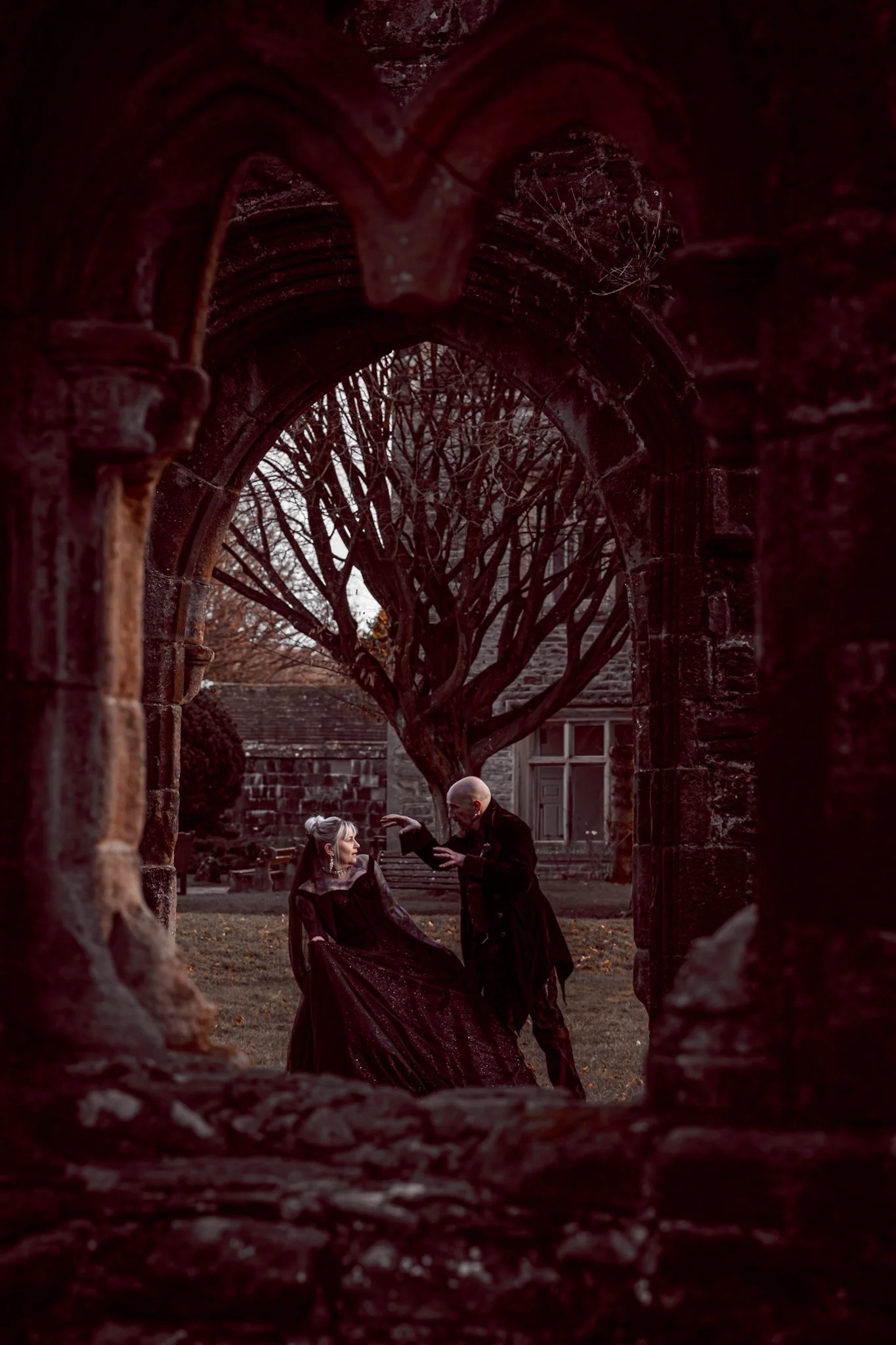
Nosferatu wedding, Image Vicky Dubois Photography
Beyond The Label
Whilst gothic weddings have their roots in the goth subculture, many of the couples who choose them would never describe themselves as goth. In fact, within the alternative community there has long been a running joke that nobody at a goth club will admit to being goth. Partly because the word has often been misunderstood. For decades, popular culture has reduced goth to a costume; black clothes, dramatic makeup and spooky aesthetics. Yet for many people within the scene, goth has always been about much more than appearance. Music, literature, art, creativity, community and a fascination with beauty beyond the mainstream have always been at its heart. Perhaps that's why so many people who are drawn to gothic weddings arrive there through different paths, whether that through music, through paganism and folklore, fantasy literature, history, architecture, nature or a love of dark romantic storytelling. They may not all use the same label, but they often share similar values; a desire for authenticity, a love of symbolism, an appreciation for beauty that exists outside convention, and a belief that a wedding should reflect the people at its centre rather than a template handed down by tradition.
Gothic Is Not The Same As Dark
This is perhaps the biggest misconception surrounding gothic weddings. Dark and gothic are not interchangeable. A wedding can be dark without being gothic. Likewise, a wedding can be deeply gothic without featuring a single skull, raven or black rose.
Think about some of the great Gothic stories; Dracula, Jane Eyre, Wuthering Heights, Rebecca, Crimson Peak. These stories are not remembered because they are dark. They endure because they explore love, longing, devotion, memory, transformation and the passage of time. The darkness simply provides the backdrop.
At its heart, Gothic art has always been concerned with what it means to be human; to love, to lose, to remember and to endure.
Castlecore wedding, Image Ariel in Blue Photography
The Themes That Define A Gothic Wedding
Whilst gothic weddings come in many different forms, they often share a number of common themes.
Romance
Not the neat, polished romance of romantic comedies, but something deeper and more enduring. Gothic romance embraces passion, devotion and the idea that love is worth choosing, even when life is uncertain. Many gothic couples are drawn to stories where love survives distance, time, adversity or even death itself.
Individuality
Perhaps more than anything else, gothic weddings are rooted in authenticity. The goth subculture emerged from people who were willing to express themselves differently, even when that meant standing apart from the mainstream.
That same spirit can be found throughout alternative weddings today. Many couples planning gothic weddings aren't trying to create a particular look. They're trying to create a wedding that feels like them. Whether that takes the form of a handfasting in ancient woodland, a candlelit celebration in a historic manor house, a metal soundtrack, a mythology-inspired ceremony or a black wedding dress is ultimately secondary.
The goal isn't to look gothic… the goal is to create something meaningful.
Symbolism
Gothic weddings are often rich with symbolism. Handfastings, family heirlooms, meaningful readings, mythology, celestial imagery, folklore and personal rituals all find their place because they carry significance.
Every detail has the potential to tell a story.
Beauty In Impermanence
One of the most enduring themes in Gothic art is the idea that beauty exists because life is temporary. Ancient ruins, autumn leaves, candlelight, old books and weathered stone all remind us that nothing lasts forever. Rather than being depressing, this perspective can make moments of love and connection feel even more precious.
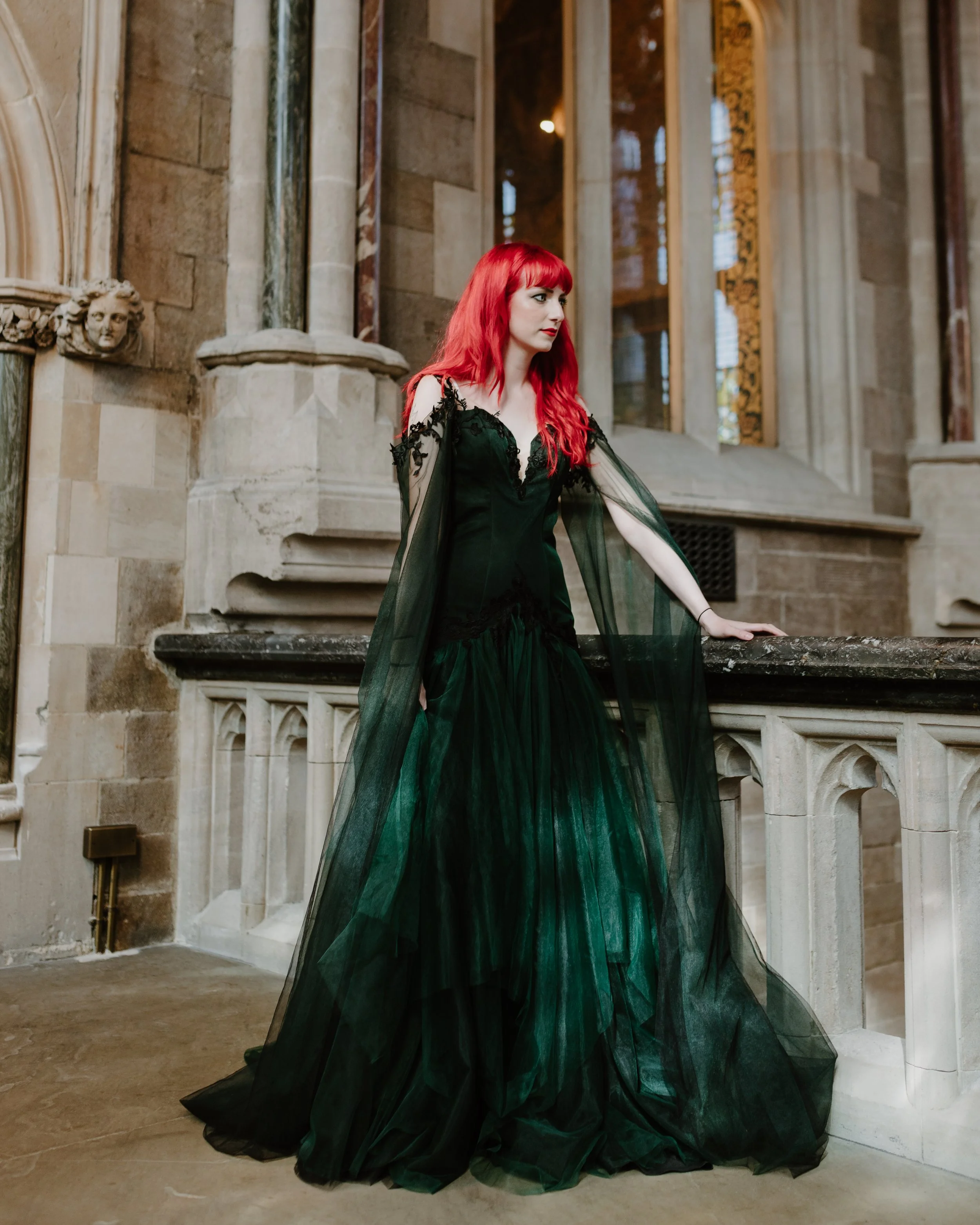
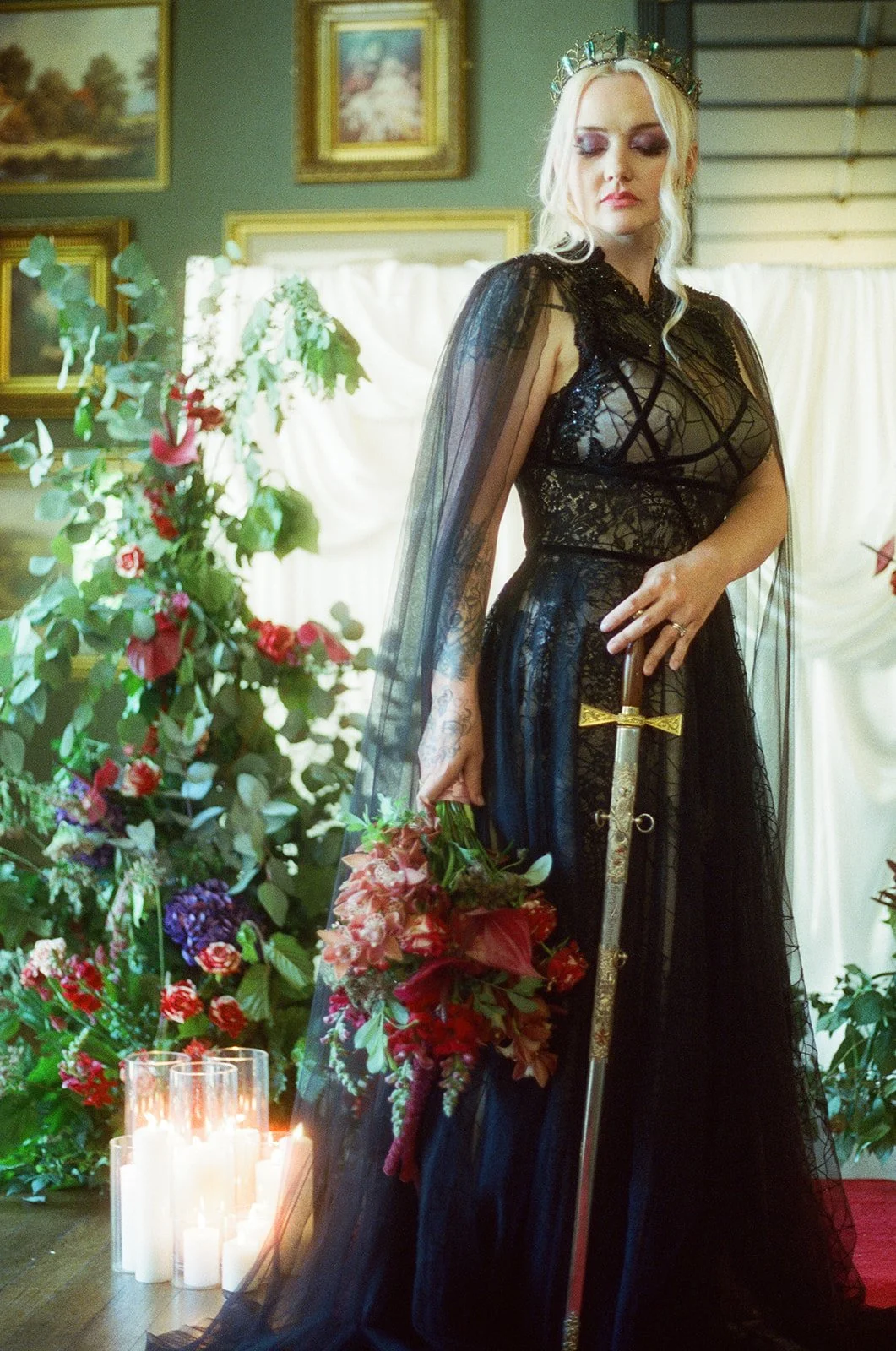
Legend Bridal, Hecate, Image Olivia J Photography
Do You Have To Wear Black?
Absolutely not.
Black wedding dresses have become one of the most recognisable symbols of alternative weddings, and for many couples they are a powerful expression of identity. However, a gothic wedding can feature any colour. We've created gothic weddings in black, burgundy, silver, green, purple, champagne, pink and of course ivory.
The colour of the dress does not determine whether a wedding is gothic. What matters is whether the wedding reflects the values, personality and aesthetic of the couple.
Not All Gothic Weddings Look The Same
One of the reasons gothic weddings are so fascinating is that there is no single way to interpret them. Some couples are inspired by Victorian elegance and candlelit manor houses. Others draw inspiration from folklore, pagan traditions and ancient woodland. Some embrace dark academia, surrounding themselves with books, history and architecture. Others take inspiration from vampires, fantasy worlds, heavy metal, mythology or celestial symbolism.
The aesthetics may vary dramatically, but the underlying philosophy remains remarkably similar - they are all expressions of individuality, meaning and romance.

Mollies Biker wedding at Samlesbury Hall
So, What Is A Gothic Wedding?
A gothic wedding is not defined by black dresses, skulls or candlelight. Those are simply some of the visual languages through which people choose to express it.
At its heart, a gothic wedding is rooted in romance, symbolism, individuality and the belief that a wedding should reflect who you are rather than who tradition expects you to be. It draws inspiration from centuries of Gothic art, literature and architecture, as well as the modern goth subculture, whilst continuing to evolve through the countless alternative communities that have embraced its themes and ideas.
This is why gothic weddings can look so different from one another. Some are inspired by forests and folklore. Some by cathedrals and Victorian elegance. Some by mythology. Some by heavy metal. Some by fantasy worlds. Some by ancient traditions.
The common thread is not the aesthetic - it's the desire to create something authentic, symbolic and deeply personal. Perhaps the simplest definition is this:
A gothic wedding is not about looking goth - it's about creating a wedding that feels authentically and unapologetically yours. Now that shit’s goth AF.
